LOADING CYNOID...
The Cynoid 7A is a mobile dual-arm system powered by CynLr's Object Intelligence (OI) stack. Featuring two 7- axis arms on a high-mobility base, it provides the redundant degrees of freedom necessary for fluid motion in cramped workspaces. Utilizing "on-the-fly" learning and the CLX vision system, it handles reflective materials in any lighting without pre-programming. With seamless dual-arm coordination and Force- Torque (FT) sensing, it executes complex tactile tasks like snap-fitting, making it ideal for unstructured automotive and electronics assembly.
FEATURES
Multi-station operation
A single robot autonomously navigates between multiple workstations to perform repetitive tasks, such as tending to a row of five CNC machines.
Multiplex Operations
Cynoid autonomously travels between different work cells, instantly switching its operational logic to handle diverse tasks across various machines and work stations.
Multi Cynoid Coordination (Hive intelligence)
A synchronized fleet of Cynoids that communicates in real-time to distribute tasks, optimize traffic flow, and operate as a single, cohesive unit across the factory floor.
Dynamic In-Motion Assembly
Cynoid tracks and manipulates objects in real-time while they are in motion, seamlessly performing assembly or picking tasks on active floor conveyors and overhead transport lines.
Engineering simplification with Dynamic Reach
Cynoid autonomously adjusts its base position to find the optimal angle for handling objects that are obstructed or out of reach from a single fixed point.
In-Transit Processing
Cynoid maximizes throughput by performing visual identification and pre-processing tasks, such as unpacking or prepping parts, while simultaneously navigating to its next destination.
Dynamic Pathfinding
Cynoid continuously calculates the most efficient path to its destination, actively detecting and maneuvering around forklifts, personnel, and temporary obstacles without stopping.
Dual-Mode Power Supply
Cynoid seamlessly alternates between untethered battery power for facility mobility and continuous AC tethering for stationary cycles. This eliminates charging downtime, ensuring uninterrupted 24/7 operation during high-repetition tasks.
Convertible Stationary Mode
Cynoid utilizes a retractable integrated stand to transform into a highly stable, stationary workstation powered directly by AC. This mechanical grounding ensures absolute structural rigidity during long-term, high-precision or high-torque manipulation.
Multi perspective vision
An arm-mounted vision system captures and analyzes visual data from multiple viewpoints, significantly enhancing spatial awareness and object recognition.
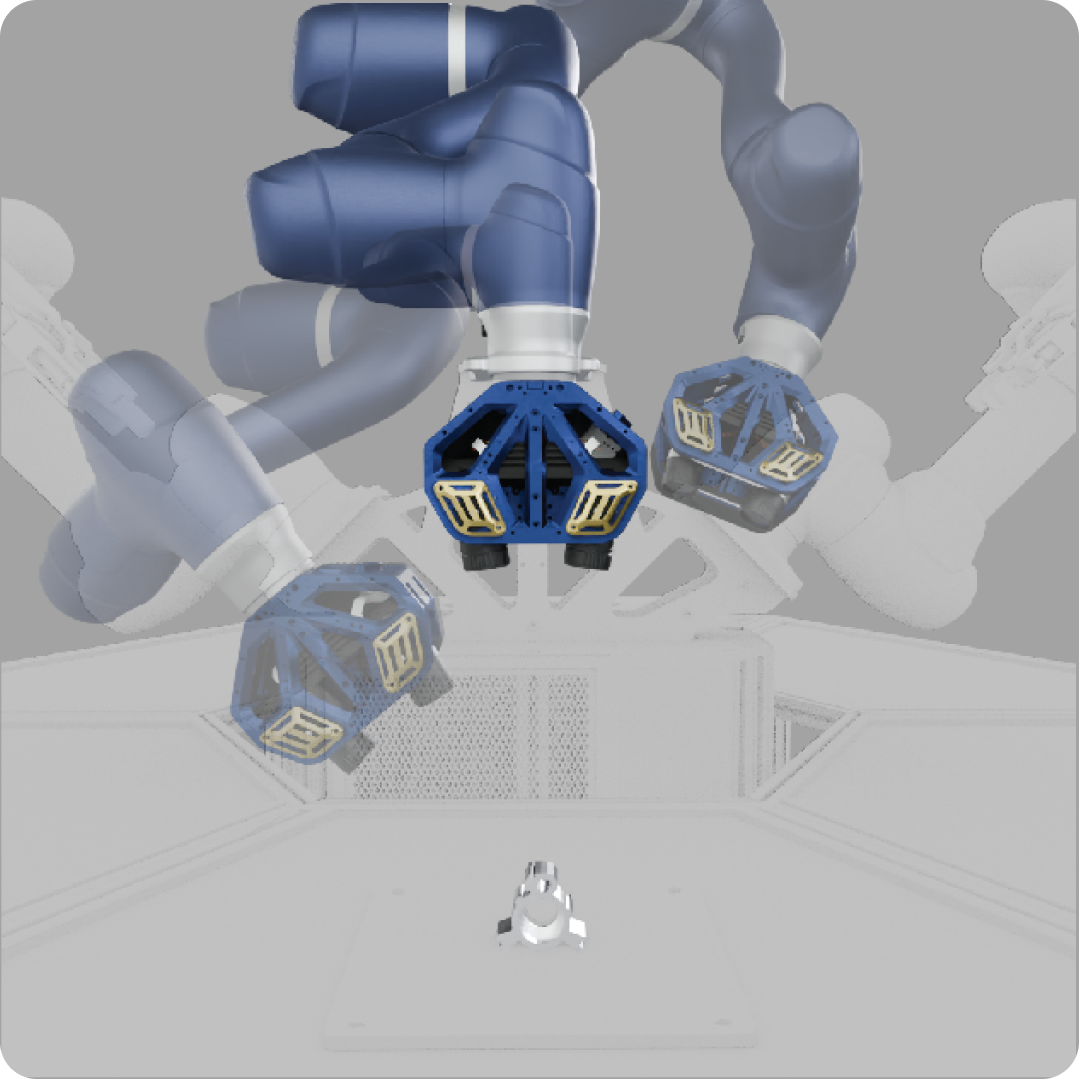
Vision based servoing
Real-time visual feedback continuously guides and corrects the robot's movements in 3D space. By instantly assessing a target's precise position, orientation, and environmental changes, the robot dynamically adapts its path on the fly for unerring accuracy.
Real-Time Object Characterization
The system evaluates an object's shape, rigidity, surface, size, location, color, and orientation on the fly. This continuous visual-tactile feedback allows the robot to adaptively manipulate unprogrammed or varying parts, eliminating the need for custom hardware setups or fixed layouts.
Light variation
The system functions reliably across different factory illumination levels, maintaining reliable performance in both high-brightness and low-light environments.
Activity / task parallelism
Multiple arms on a single robot operate completely independently to handle different parts or execute separate tasks simultaneously. This dramatically increases throughput and halves cycle times without requiring the footprint or cost of extra workstations.
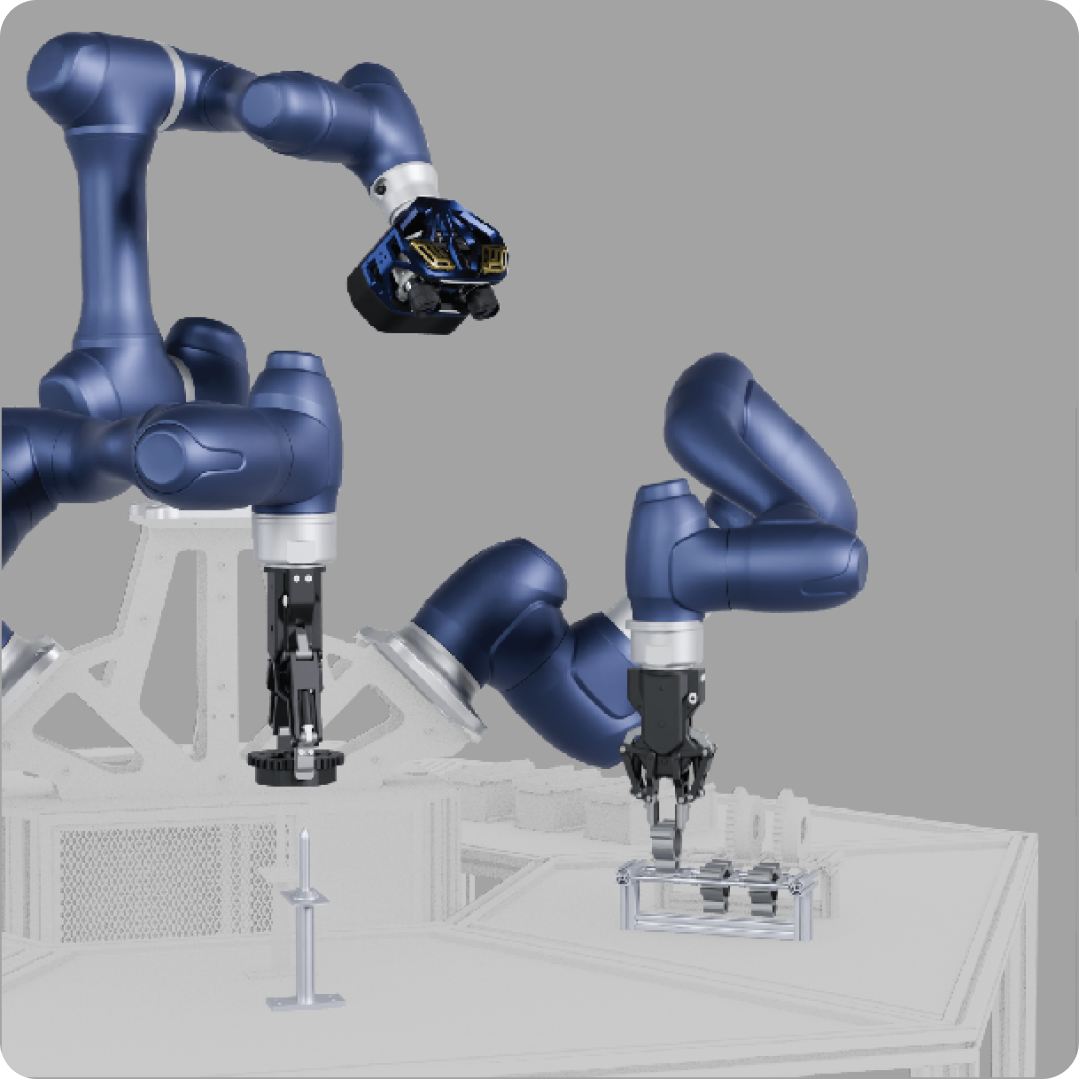
In-Air Reorientation
Synchronized 360-degree orientation of an object between arms. This eliminates the need for dedicated mechanical flipping fixtures or physical turnover stations, heavily reducing cycle times.
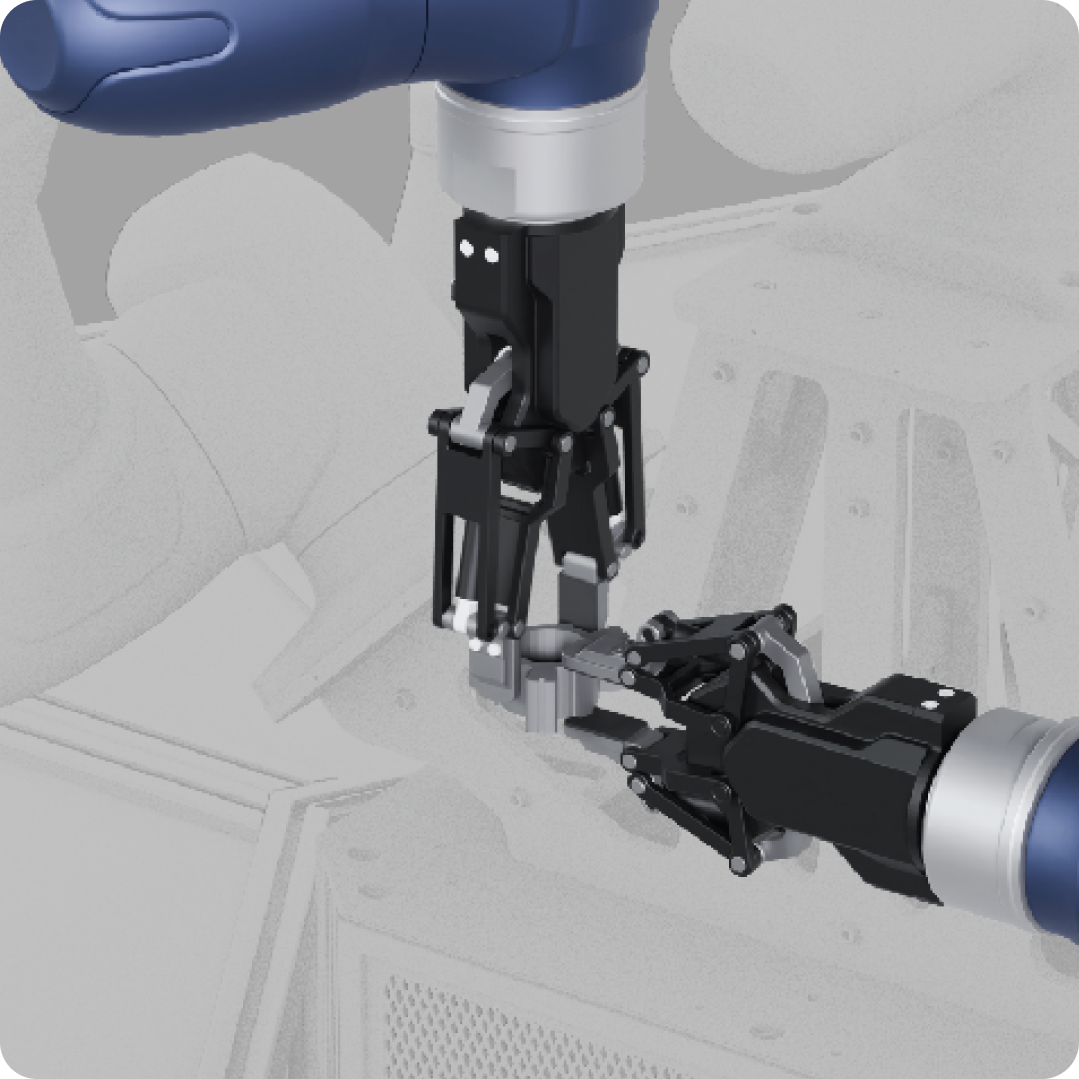
Force and Torque Sensing
Advanced force and torque feedback enables real-time collision detection, adaptive robot compliance, and high-accuracy precision placement. This ensures safe operation and flawless assembly across diverse operational needs.
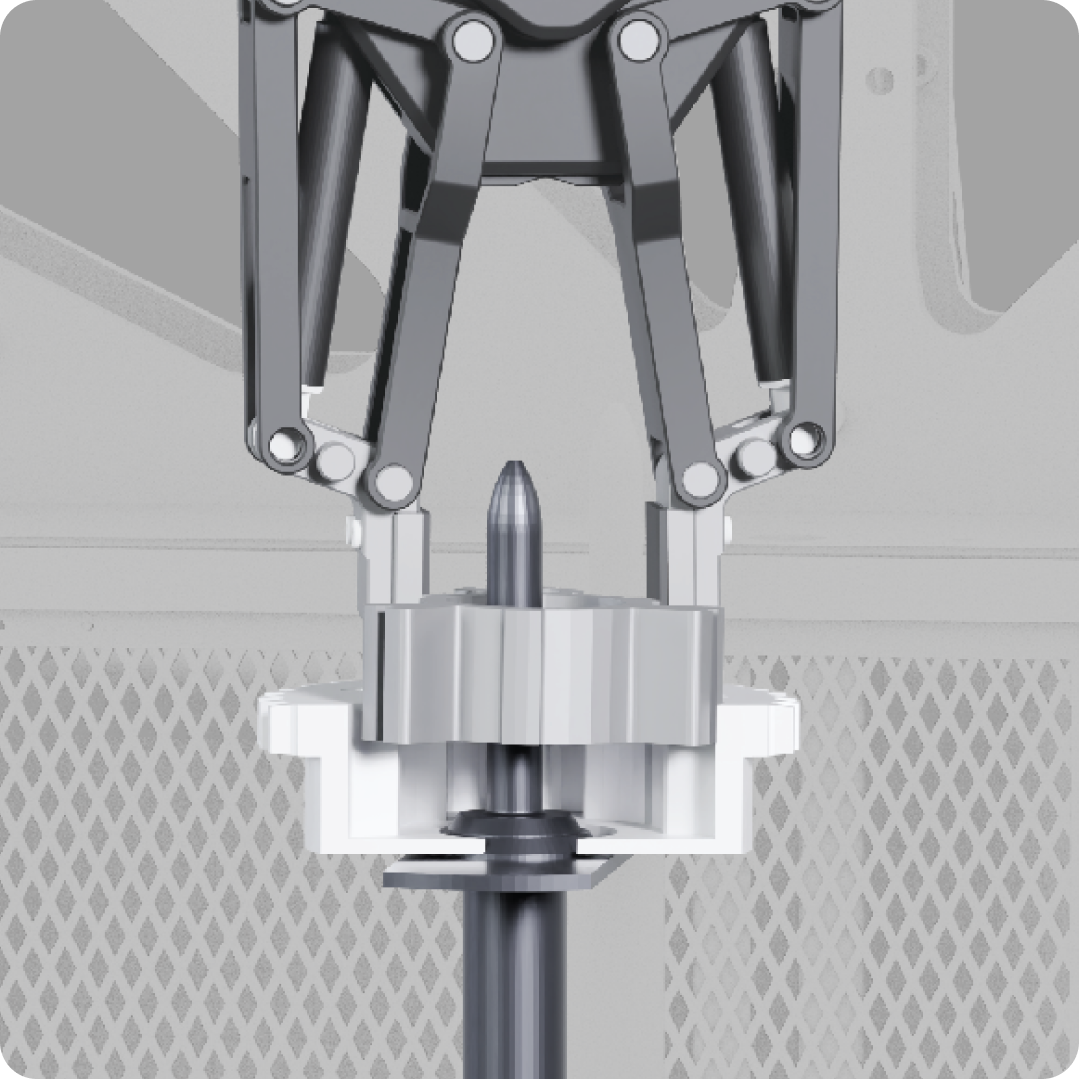
Autonomous Failure Reattempt
The robot instantly detects picking failures caused by misalignment, poor grip, or sensor errors and automatically adjusts its position to try again. This self-correcting loop prevents line stoppages and workflow delays without requiring human intervention.
Active Slip Detection
The robot monitors gripper current and force-torque feedback to instantly sense when a component begins to slip. It dynamically adjusts its grip pressure on the fly, completely preventing dropped parts and product mishandling.
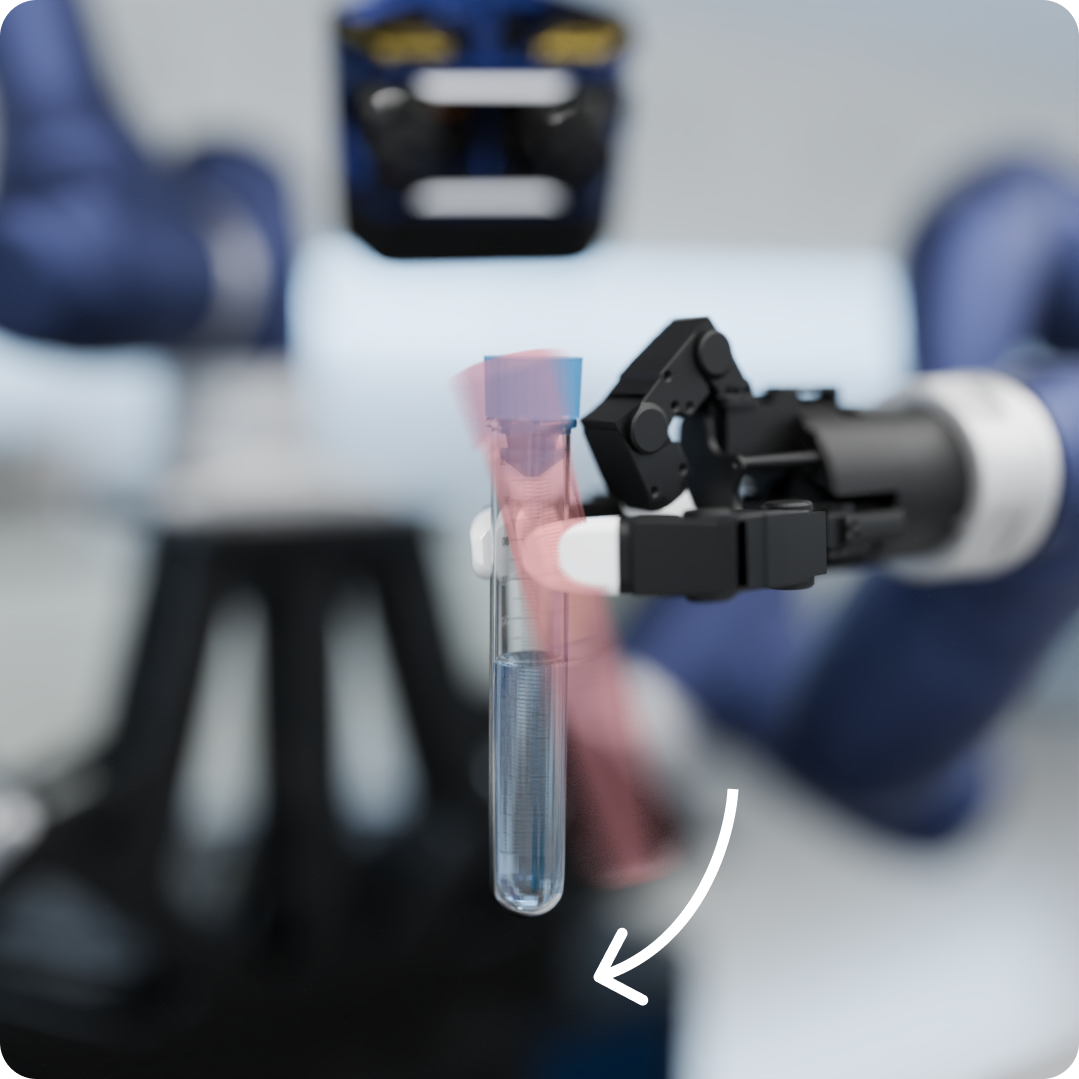
Adaptive Part Grasping
The system combines visual and tactile sensing to instantly evaluate and adapt to the shape, material, and rigidity of each object. This ensures the optimal grip force for varying components, completely eliminating part damage and the need for frequent gripper changes.
Dual arm compliance
Synchronized force feedback allows both arms to dynamically yield and micro-adjust to each other. This compliance ensures the arms never damage the handled part or each other, eliminating the need for complex assembly fixtures and prevents part jamming or structural stress during tight assemblies.
Enhanced Payload
Coordinated dual arms cooperatively lift and manipulate heavy or bulky objects together. This achieves a combined payload capacity that exceeds individual arm limits, eliminating the need to invest in a larger, high-cost robot.
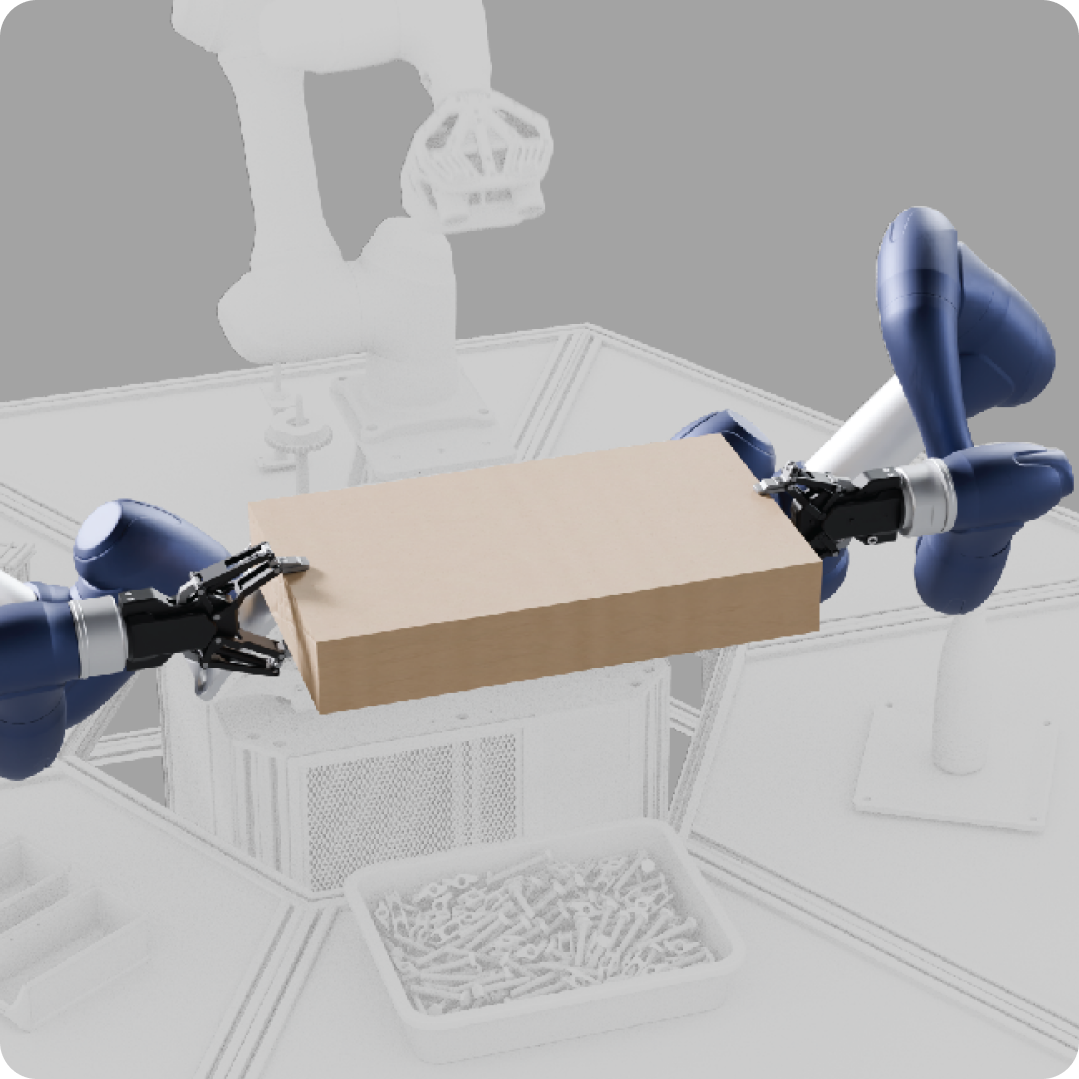
Multi arm Synchronized operation
Multiple robotic arms work in tight synchronization to execute complex, high-precision assembly and manipulation tasks. This seamless coordination enables intricate multi-hand maneuvers, completely eliminating the need for task-specific mechanical jigs.
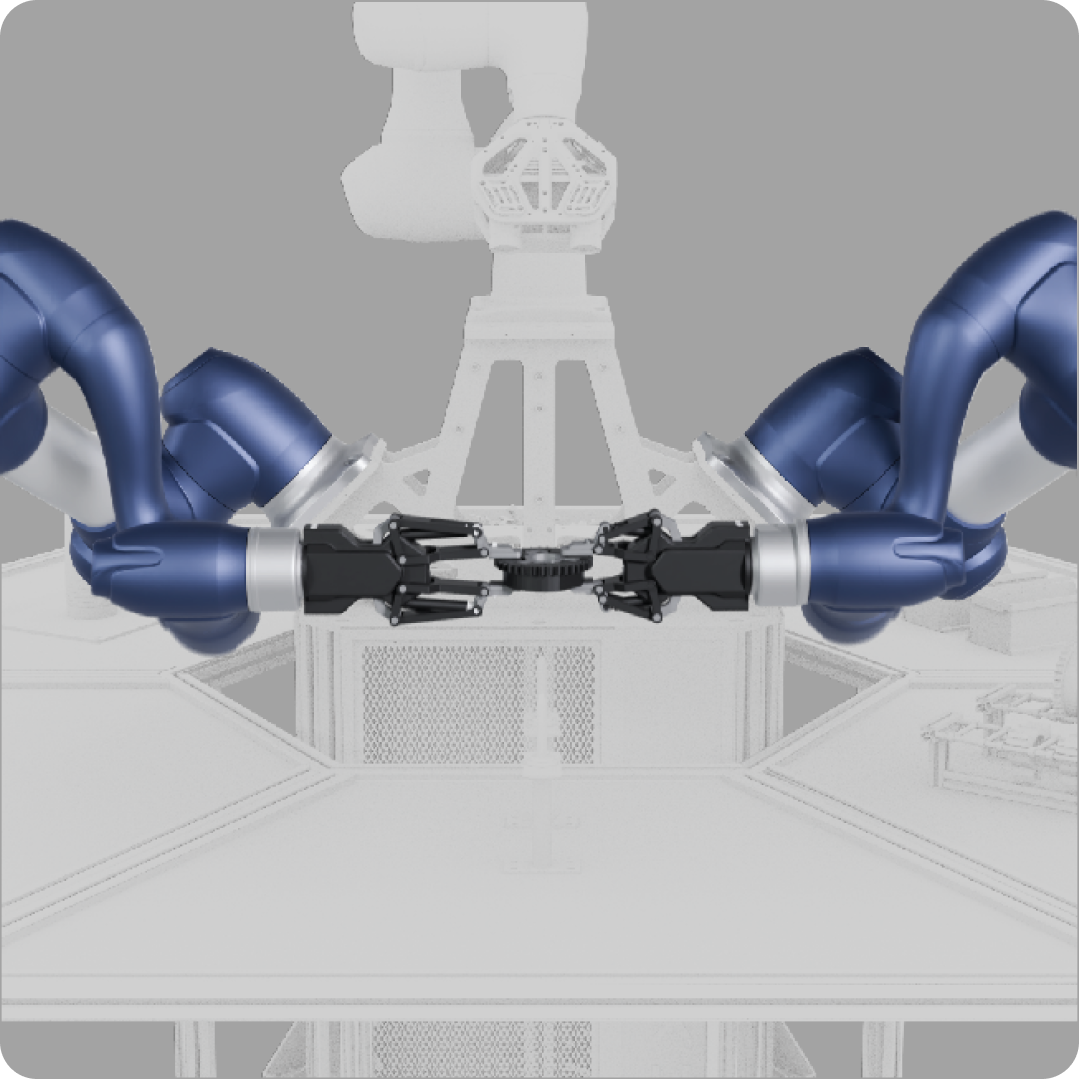
Hot Swap
Quickly swap between different factory workstations with minimal installation and configuration time. This allows a single asset to handle multiple production roles, eliminating long layout re-engineering downtime.
Applications
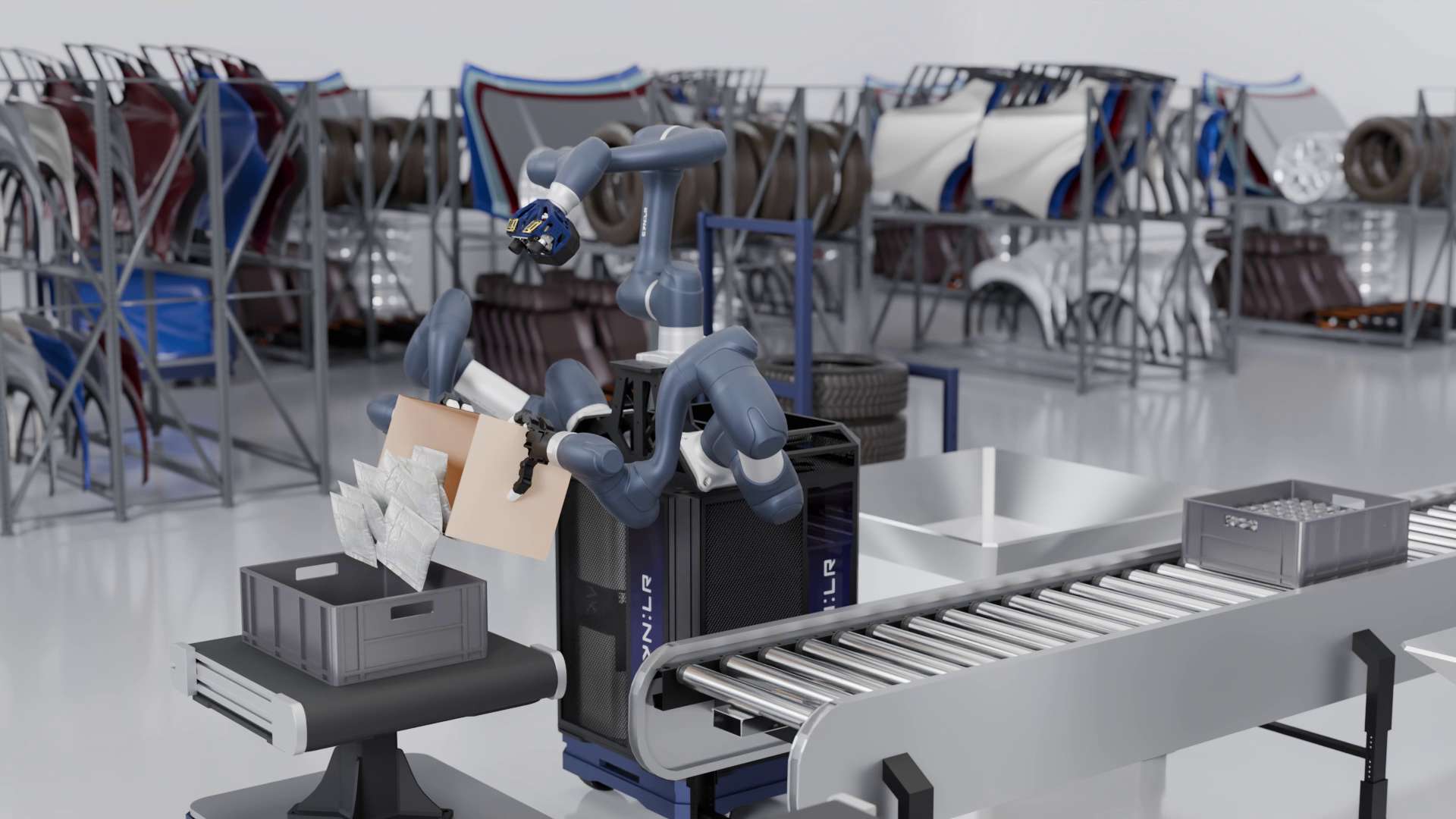
Bin Decanting
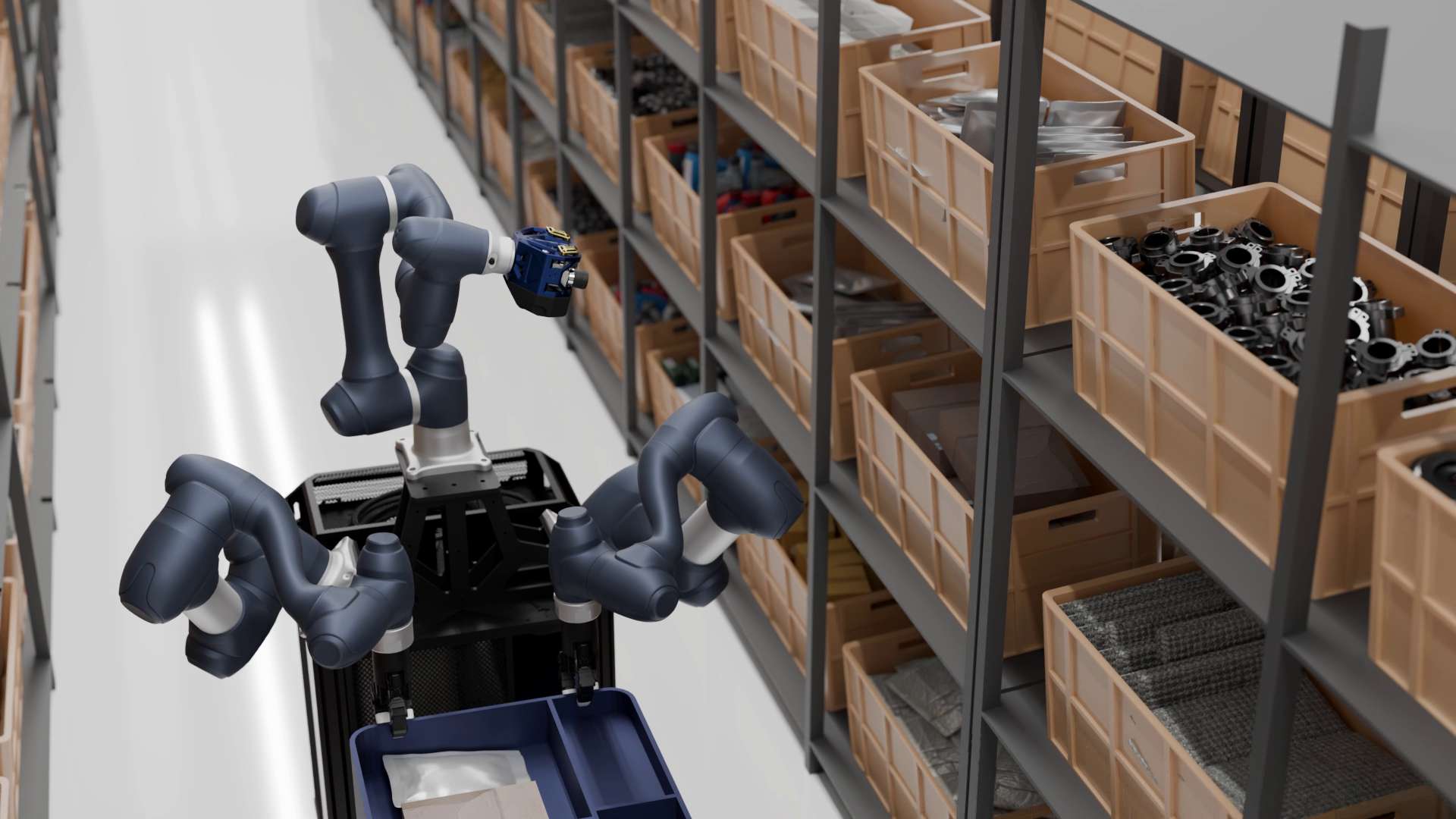
Kitting (Robot to Goods)
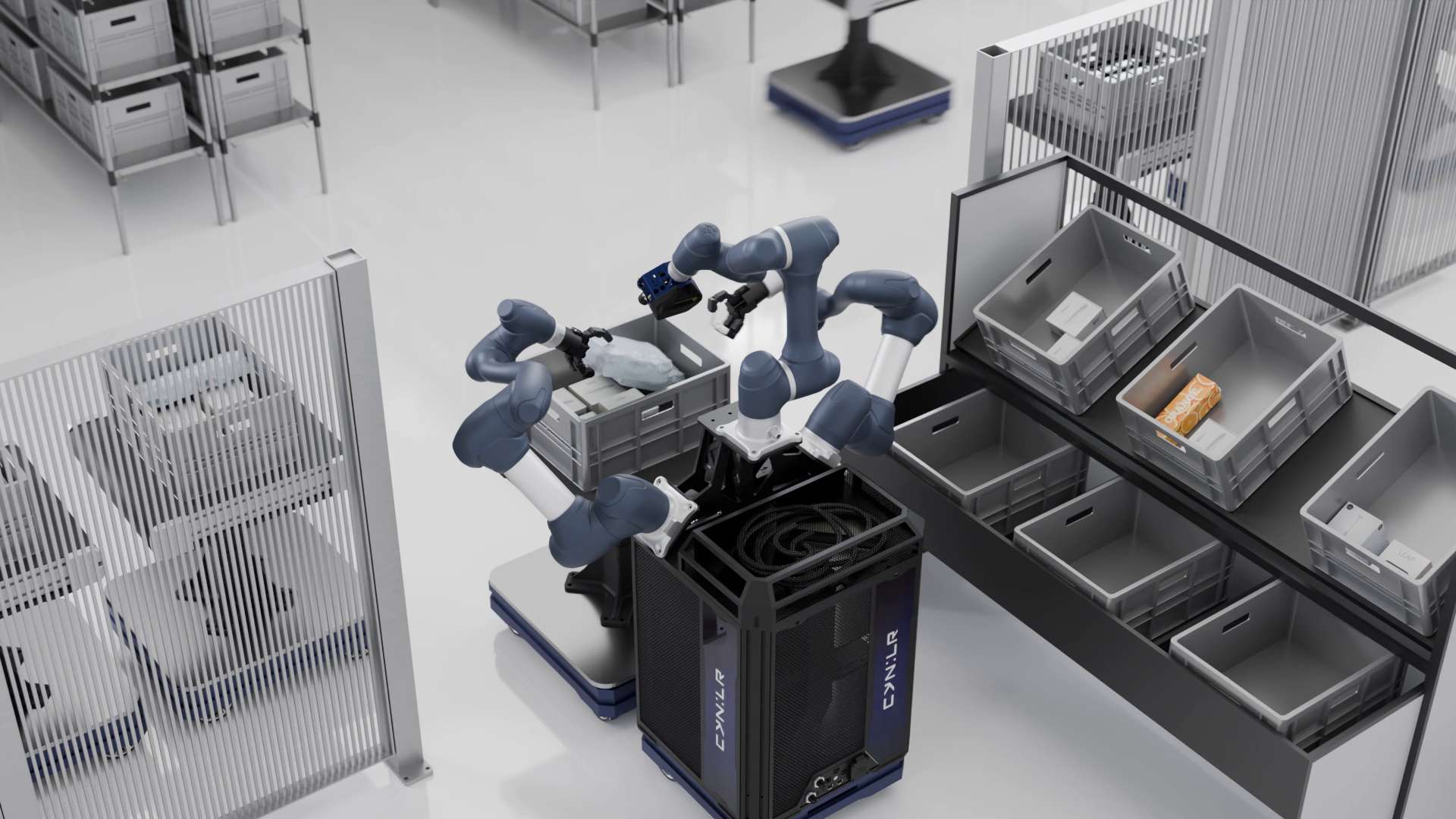
Package Sorting
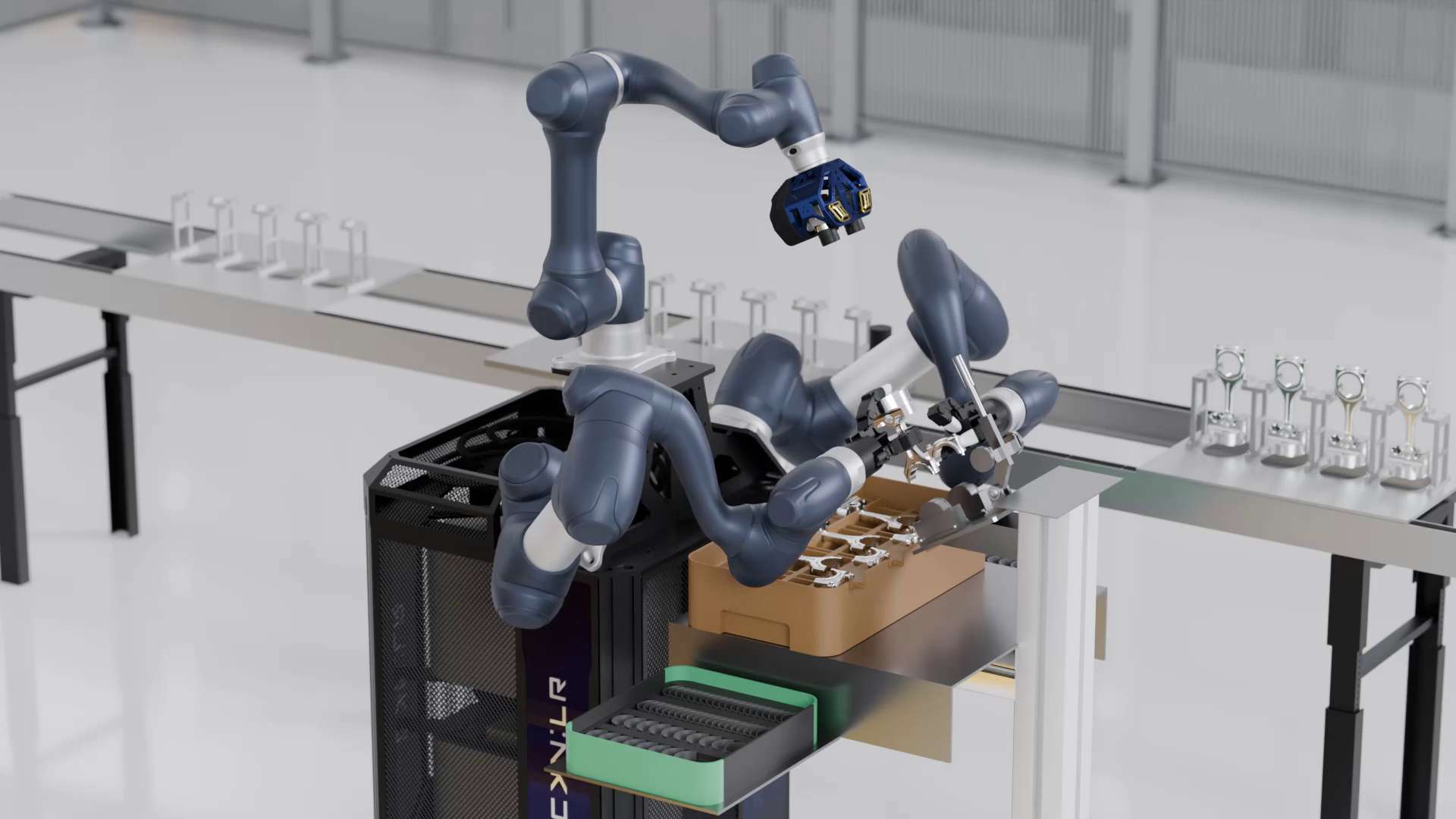
Press Assembly
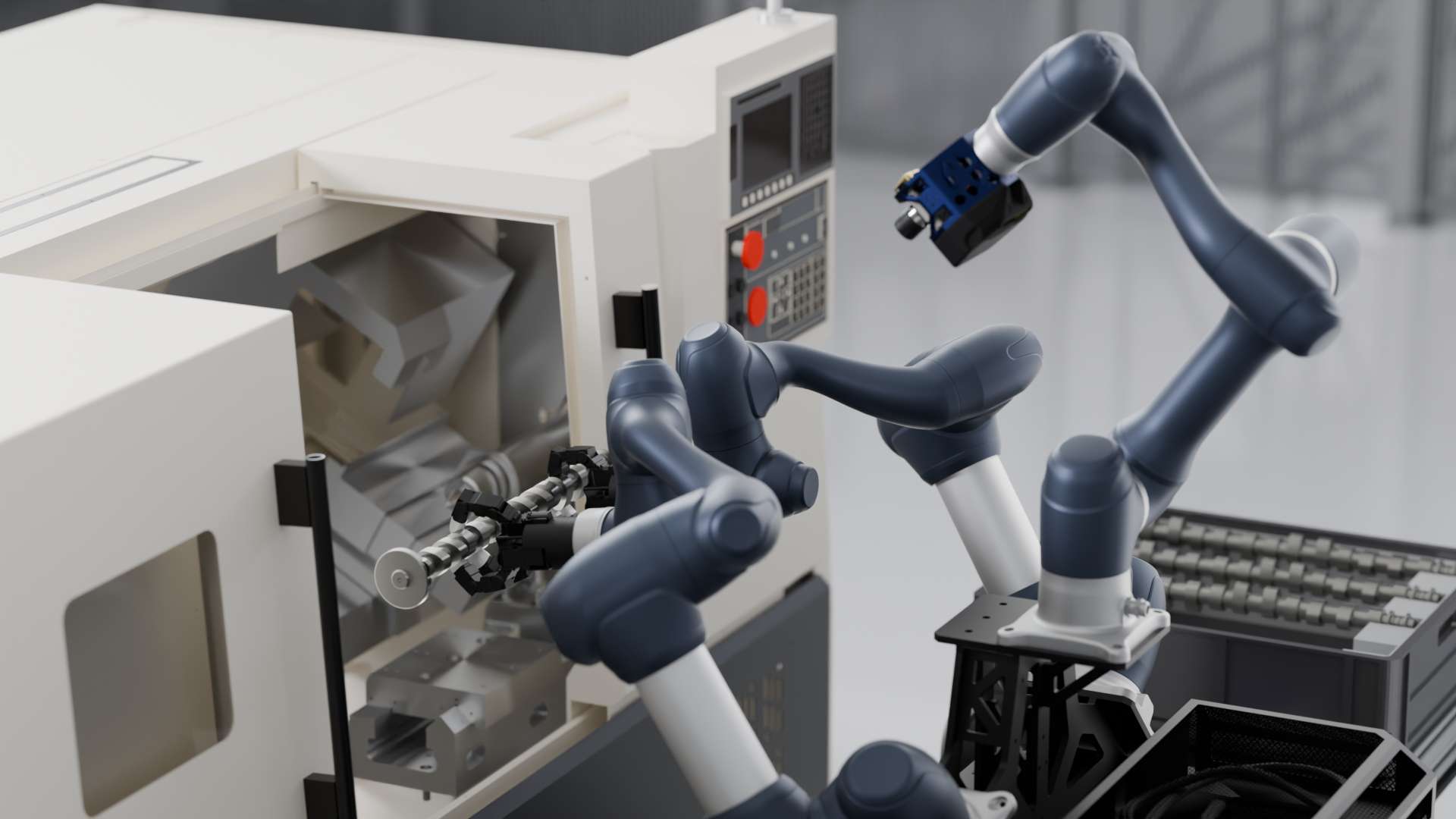
Machine Tending
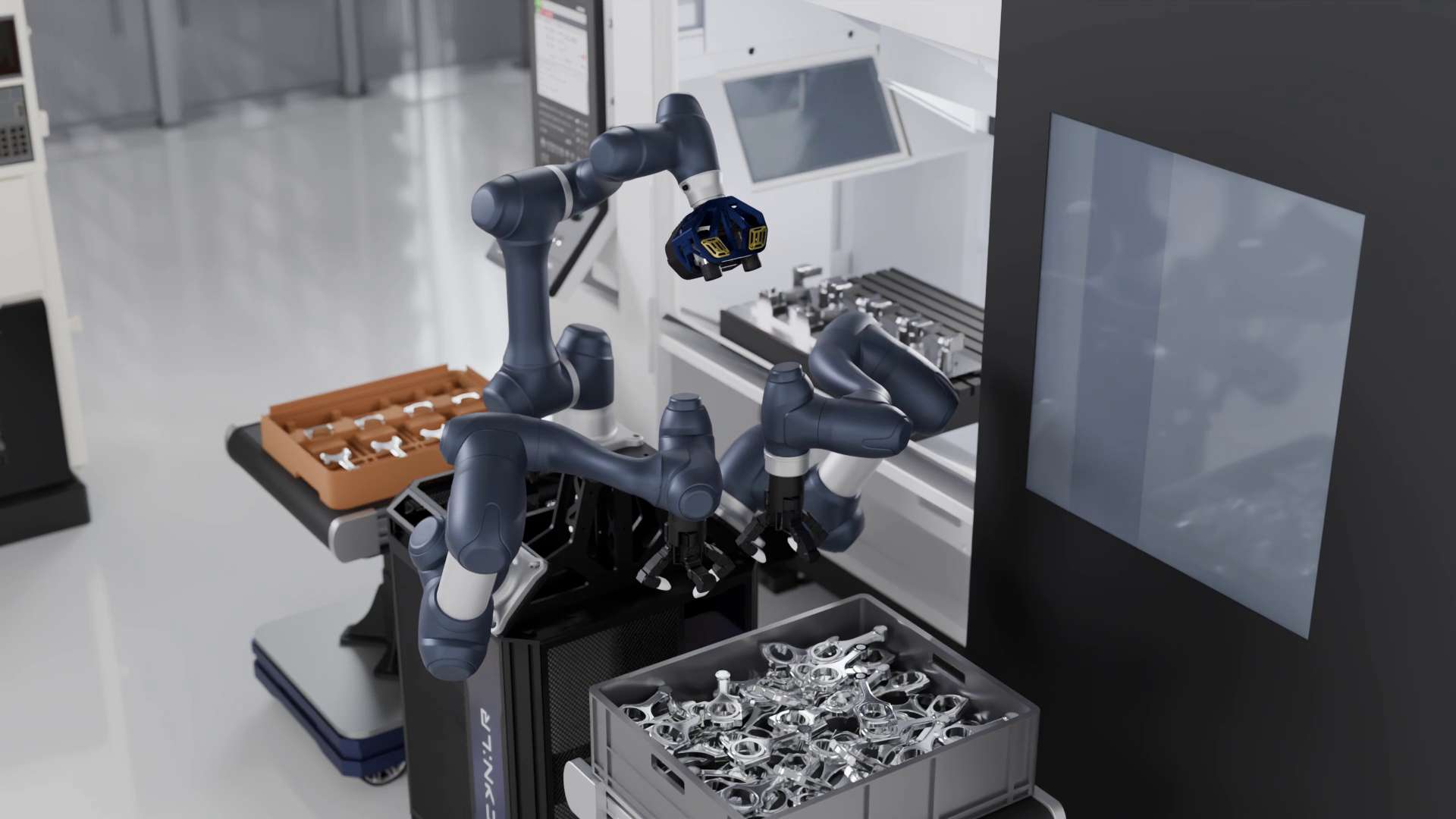
Part Feeding
Need a custom solution
for your factory?
Connect with our solutions engineers to define your requirements. We'll design the optimal configuration for your facility and guide you through a seamless implementation process.
Downloadables
Get a first-hand look at our latest innovations
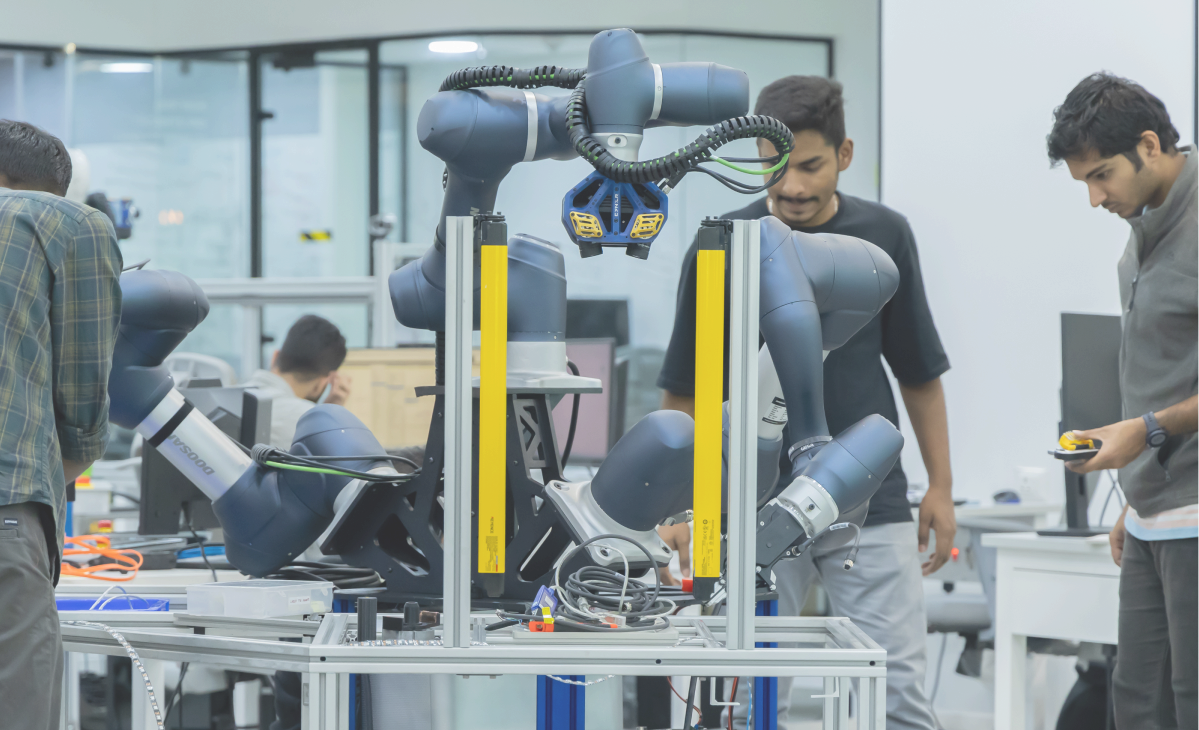
Visit our R&D center to see our tech in action. Test the hardware, explore the software, and understand exactly how our robotic solutions can scale with your facility.